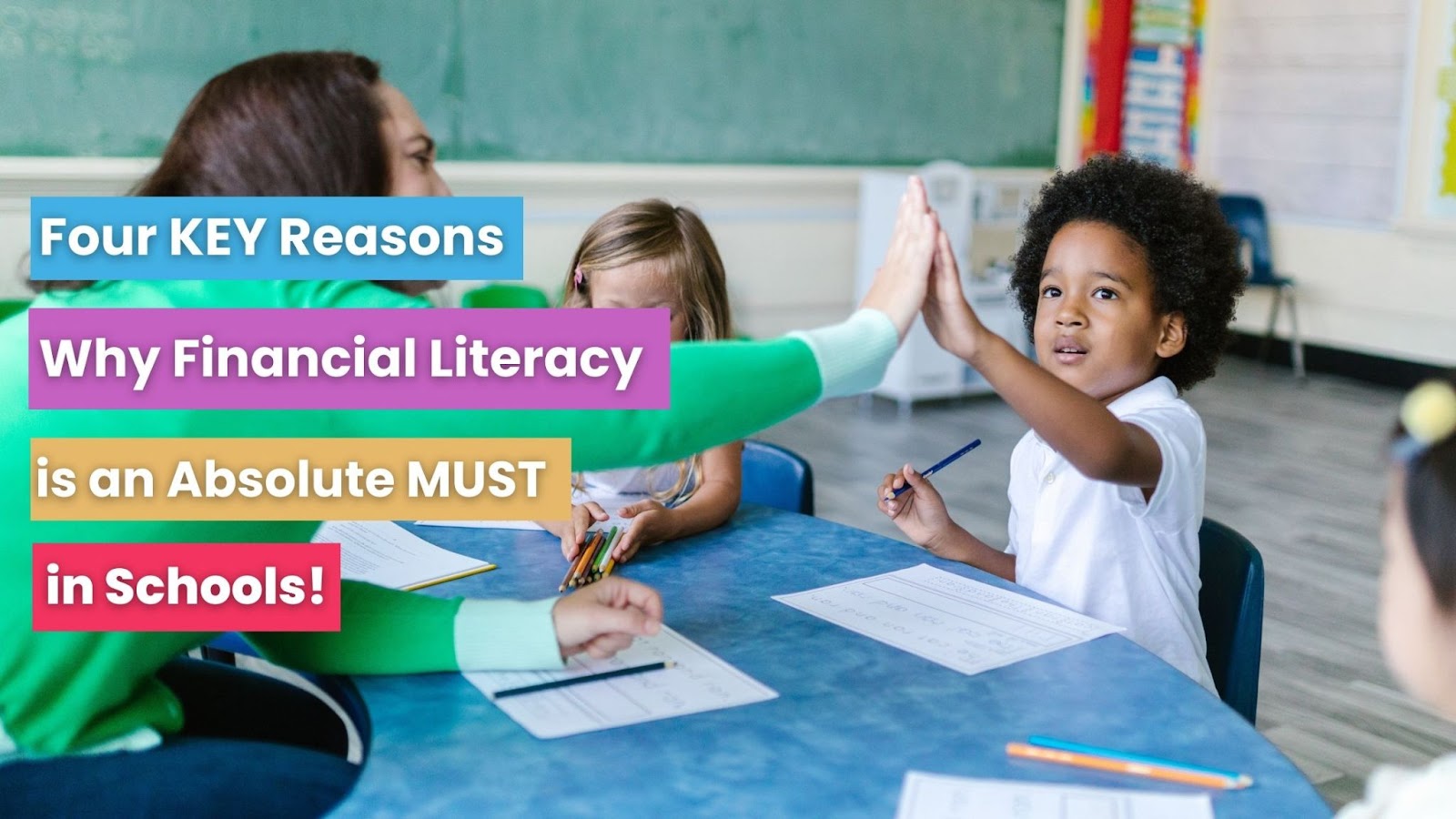

Reading. Writing. Science. Math. Personal Finance.
All of these subjects are important for students to understand, and in some cases, master. But one subject in particular is consistently left out of curriculums across the country.
As grown ups, most of us will experience things like loans, debt, credit, banks, etc. So why aren’t schools teaching us how to properly handle these financial realities?
Why is learning the periodic table and Pythagorean theorem more important than learning entrepreneurship, savings, and investing money? News flash – It’s not!
Here are reasons why we believe teaching financial literacy in schools is a must!
Young People Are in Debt

According to the Urban Institute, a nonprofit organization which researches social and economic policy, one in five 18-24 year olds are in serious debt. That’s just one year out of high school for some! 🙁
Is this how we want our children to enter adulthood? In debt?
Requiring financial literacy lessons while in middle school or earlier is a great preventative measure for keeping our young people from falling into debt before they turn 18.
Knowledge is Power

According to the Financial Industry Regulatory Authority (FINRA), 53% of people with higher financial literacy knowledge spent less than their income from work.
That means, people who were taught financial literacy learned the importance of living within their means. They’re cognizant of the consequences of spending beyond their income, so they don’t end up in debt like their counterparts who don’t possess the same financial knowledge.
Overspending on Rent

Research conducted by the Census Bureau, a government agency which researches and provides data about people and the economy, discovered low income renters spent a larger share of income on rent. That’s nuts!
How did we get here? Could some of these be cases of people living beyond their means and choosing wants over needs, luxury over utility, when it comes to picking an apartment? Or even knowing how to properly manage their money?
Even when times are tough and we just don’t make enough, knowing how to save any amount of money can help ease some of the burden of paying rent. Inflation has caused the price of so many things to increase, including housing, so it is so much more important to know how to spend what you do have.
If young people were trained during their formative years on how to handle their finances, especially before they move out on their own and into their own apartment, they’d know how to make smart financial decisions (see some great financial tips here!).
Student Loan Debt is High

We all know student loan debt in the US is out of control, and it’s not getting any better!
LendingTree.com, an online lending marketplace, found that Americans owe $1.77 trillion dollars in federal and private student loans as of the second quarter of 2023. That is a 1.25% increase from the first quarter of 2022..
For most students attending college, taking out a loan is a necessary evil to obtain higher education.
High schools prepare students for college, but they can play a hand in reducing the student loan debt problem plaguing the US by preparing students for what happens after college, which is repaying money borrowed from federal and private lenders without being buried by interest and penalties.
Conclusion

As of today, at least 22 states require at least one semester of financial literacy in order to graduate.
It’s a good start, but if they want to greatly reduce debt and produce more fiscally smart and responsible adults, all 50 states should include financial literacy in their curriculums. Since so many young adults (as young as 18) are in debt, they should begin these financial literacy lessons as early as middle school and/or elementary school.
It’s a must!